
A Guide to Pilates
February 22, 2026
An Exercise System That Strengthens and Balances the Body
This Pilates guide shows you what is undoubtedly the most elegant way to combat the inactivity and posture problems that come with modern life. More than just a sport, Pilates is a mind-body discipline that lets you discover your body’s limits. In this guide, you’ll find every detail, from the fundamentals of Pilates and its different types to suggested weekly programs and its benefits for your health.
Contents
- What Is Pilates? Its Core Philosophy and History
- Types of Pilates: Which One Is Right for You?
- Personalized Choices: Who Should Choose Which Type?
- The Scientific Benefits of Pilates: Why Should You Do It?
- Basic Materials and Equipment Used in the Exercises
- Sample Weekly Pilates Program
- Start Today for a Stronger Future
1. What Is Pilates? Its Core Philosophy and History
Pilates is an exercise method developed in the early 20th century by Joseph Pilates under the name “Contrology”. The main aim of this system is to gain complete control over the muscles by using the mind. Focusing especially on the core muscles, Pilates is built on the harmony between breathing techniques and controlled movements.
What sets Pilates apart from other sports is that it lengthens the muscles without bulking them up, and builds strength from the inside out by activating the deep muscles. Today, it is an indispensable way of life both for rehabilitation and for anyone who wants a fit look.
2. Types of Pilates: Which One Is Right for You?
Pilates is divided into different branches depending on how it is practiced and the equipment used:
- Mat Pilates: The foundational level, done on just a mat using your own body weight. It teaches you to work against gravity.
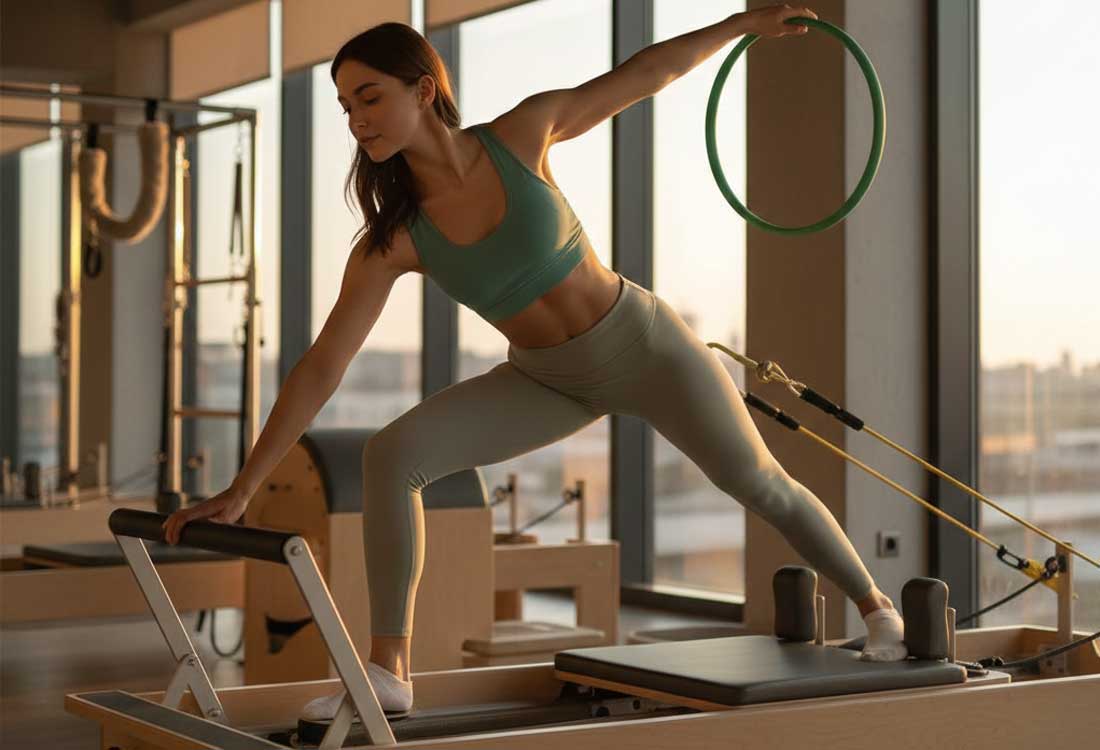
- Reformer Pilates: Done on a special machine made up of a mechanism on rails, springs and straps. Because the resistance can be adjusted, it shapes the muscles quickly.
- Apparatus Pilates (Cadillac & Chair): Advanced workouts using equipment such as the Cadillac, Chair and Barrel, which change the effect of gravity and allow more complex, acrobatic movements.
- Prenatal Pilates: A safe method practiced under expert supervision that helps expectant mothers ease lower back pain, increase their breathing capacity and have an easier birth.
- Clinical Pilates: A treatment-focused type carried out with physiotherapists, aimed at improving specific problems such as herniated discs, scoliosis or joint disorders.
- Functional Pilates: Focuses on improving the body’s natural ability to move in daily life, such as pushing, pulling and rotating.
3. Personalized Pilates Choices: Who Should Choose Which Type?
Everyone’s body and goals are different. Here’s the right starting point for you:
- Beginners: Should lay the foundations with Mat Pilates to understand the basic logic of the movements.
- Those Who Want to Lose Weight and Tone Up: With its resistance-training effect, Reformer Pilates delivers the fastest results.
- People with Chronic Pain: For lower back, neck and upper back problems, Clinical Pilates should always be the choice.
- People with a Sports Background: Those who want to push their bodies can turn to Apparatus Pilates variations.
- People with Posture Problems: Spinal health should be supported with both Mat and Clinical Pilates.
4. The Scientific Benefits of Pilates: Why Should You Do It?
The physical and mental transformation that regular Pilates brings is remarkable:
- A Strong Core: Makes the abdominal and lower back muscles we call the “Powerhouse” as strong as steel.
- Better Posture: Prevents hunching (kyphosis) in desk workers and helps you stand up straight.
- Flexibility and Mobility: Lengthens the muscles and increases the joints’ range of motion, reducing the risk of injury.
- Mental Clarity: Because it is breath-focused, it lowers cortisol levels and helps you manage stress.
- Circulatory System: By boosting blood circulation, it helps the skin look brighter and the body feel more energetic.
5. Basic Materials and Equipment Used in the Exercises
These are the accessories that make Pilates sessions more effective:
- Pilates Mat: Should be thick enough to protect the joints.
- Pilates Ball: Large balls are used for balance, small balls for resistance.
- Magic Circle (Pilates Ring): Perfect for working the inner thigh and arm muscles.
- Resistance Bands: Used in different strength levels to tone the muscles.
- Blocks and Rollers: Ideal for support during movements and for muscle massage (fascia release).
6. Sample Weekly Pilates Program
Create an ideal balance that gives your body time to rest and recover:
| Day | Workout Type | Duration | Focus |
| Monday | Mat Pilates | 45 min | Core Strength and Abs |
| Tuesday | Reformer Pilates | 45 min | Full-Body Toning |
| Wednesday | Rest | – | Body Recovery |
| Thursday | Mat Pilates | 40 min | Flexibility and Spine |
| Friday | Apparatus Pilates | 45 min | Resistance and Balance |
| Saturday | Breathing & Stretching | 30 min | Mental Relaxation |
| Sunday | Rest | – | Free Time |
7. Start Today for a Stronger Future
Pilates isn’t just a workout; it’s quality time you set aside for yourself. With regular practice, within just a few weeks you’ll start to feel the difference in your body, walk taller and breathe more deeply. Choose the type that suits your level and needs, and take the first step toward becoming a healthier version of yourself.
Discover the Pilates Studio Nearest You!
Need professional guidance to achieve the toned, healthy body of your dreams? Use RezforYou to browse the Pilates studios that suit you best, read reviews and book online in seconds.